
BOOK REVIEW
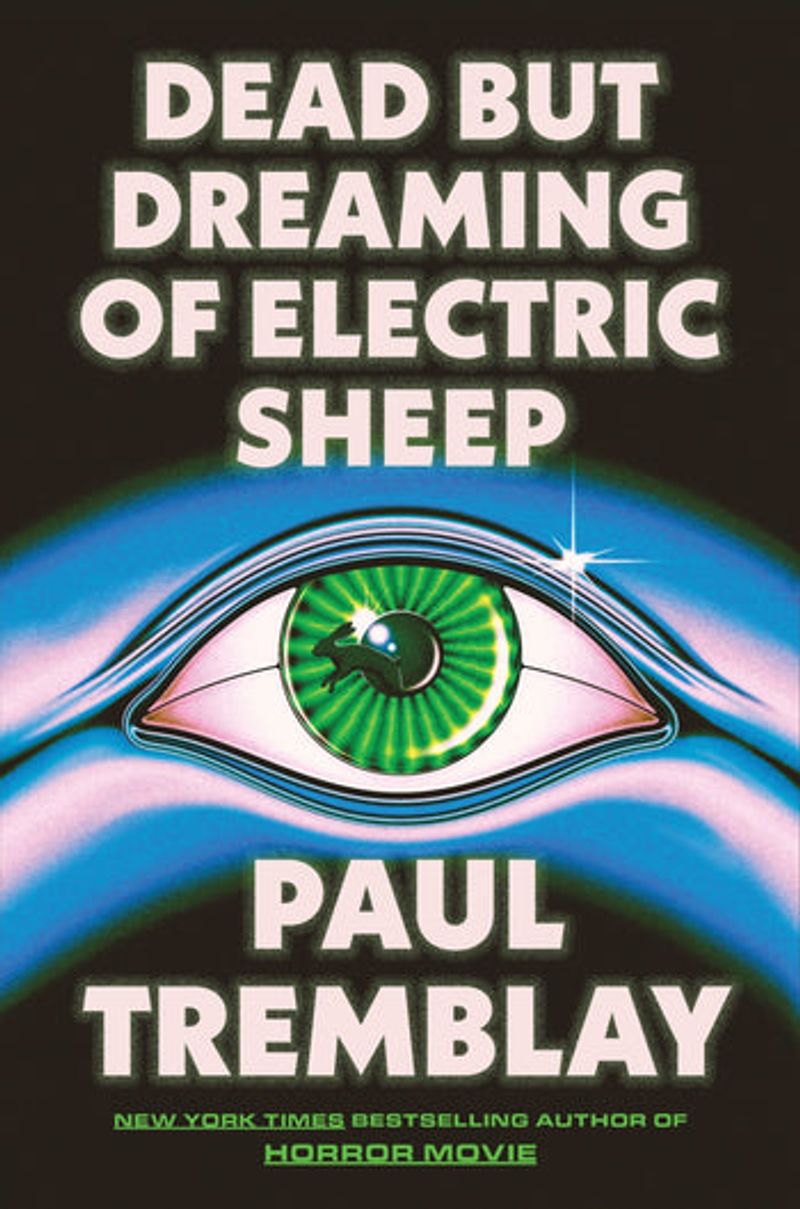
Dead But Dreaming of Electric Sheep
Turns out “remote-controlling a mostly dead guy with AI in his brain” is somehow one of the most horrifyingly plausible premises I’ve read this year.
I genuinely had no fucking clue what was happening during parts of Dead but Dreaming of Electric Sheep, and somehow that made me love it MORE. This is weird, disorienting, funny, horrifying, and probably one of the most effective books about AI I’ve read because the technology itself isn’t really the scariest part. It’s what people are willing to do with it.
Julia Flang is a former semi-professional gamer stuck working jobs she hates when her estranged mother, an executive at one of the biggest tech companies in the world, offers her an extremely well-paying temporary job.
The assignment sounds insane.
Julia has to transport a man in a vegetative state across the country. His brain has been implanted with proprietary AI technology that allows his body to be remotely controlled, and Julia’s gaming experience makes her particularly qualified to operate him through what is basically a video game controller.
She calls him Bernie.
Except Bernie might not be quite as gone as everyone says he is.
And THAT is where this book fucked me up.
Because alongside Julia’s story, we’re experiencing this bizarre nightmare world through the perspective of a man who doesn’t know who he is, where he is, or what’s happening to him. Those sections are surreal and intentionally confusing, but the more the two narratives begin connecting, the more horrifying the entire situation becomes.
There’s something deeply disturbing about watching Julia control another human body while gradually realizing there may still be a person trapped somewhere inside it.
Move your arm.
Walk forward.
Turn your head.
Keep moving.
Meanwhile, the person inside that body may be experiencing something completely different.
The whole thing turns bodily autonomy into technological horror. Bernie’s body has effectively become hardware. The company owns the technology inside his brain, Julia has the controller, and everyone involved can conveniently tell themselves that none of this matters because the person who used to inhabit that body is supposedly gone.
Except... what if he isn’t?
I also loved how fucking messy and experimental this gets. There were moments where I genuinely questioned what was real, what was AI-generated, what was memory, and whether I was even interpreting what I was reading correctly. Normally that level of confusion can lose me, but here it made sense because certainty itself is part of what the book is fucking with.
And underneath all the weirdness is something that feels uncomfortably current.
Corporations rushing technology forward because they can. Human beings becoming test subjects. Questions about who owns something created inside another person's body. Technology being marketed as progress while nobody stops long enough to ask whether maybe we should leave some shit alone.
The scary part isn't some hypothetical evil supercomputer deciding to destroy humanity.
The scary part is humans deciding there’s money to be made before anyone figures out what the consequences are.
By the end, I was disturbed, confused, entertained, and thinking about way more than I expected when I started a book about a woman remote-controlling a mostly dead guy across America.
Exactly my kind of shit.