BOOK REVIEW
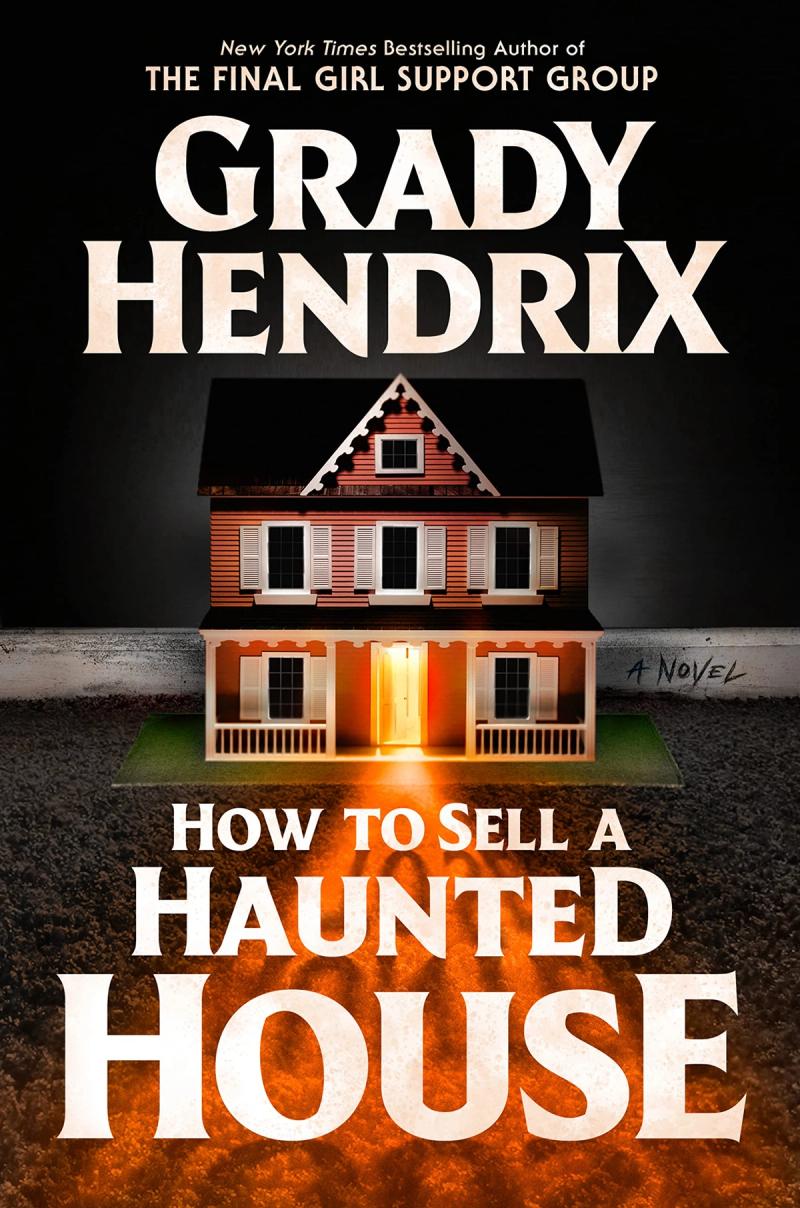
How to Sell a Haunted House
I expected a haunted house. I was not prepared to develop genuine beef with a fucking puppet.
I expected How to Sell a Haunted House to give me creepy dolls, a haunted childhood home, and some classic Grady Hendrix chaos. I did NOT expect to develop genuine hatred for a puppet while simultaneously getting emotional over two siblings trying to deal with their parents’ deaths. This book is ridiculous, creepy, funny, and surprisingly sad, and somehow all of those things work together.
After Louise's parents suddenly die, she has to return home to Charleston and deal with basically everything she doesn't want to deal with: their house packed with decades of belongings, her mother's enormous collection of puppets and dolls, and her estranged younger brother Mark. The siblings need to figure out what to do with the house, but it becomes increasingly obvious that clearing out their parents' belongings isn't going to be as simple as throwing everything into boxes and calling a realtor.
Because, unfortunately for Louise, the puppets have opinions.
Pupkin is genuinely one of the most obnoxious little horrors I've encountered in a book. There's something about a creepy puppet that already gets under my skin, but Hendrix takes it so far that it becomes both horrifying and completely absurd. I would go from laughing at something to thinking oh absolutely the fuck not within a few pages.
But the family story was actually what made this work for me.
Louise and Mark have YEARS of resentment between them. They're grieving the same parents while remembering completely different versions of their childhood, and being forced back into their family home immediately brings all of that shit to the surface. Neither of them is always likable. Neither of them is completely right. And watching them slowly uncover things their parents never told them makes the haunting feel connected to something much bigger than an evil object.
The house isn't just full of ghosts. It's full of stuff. Puppets, dolls, memories, arguments, secrets, childhood embarrassment, grief, and everything their parents left behind. I loved how Hendrix used the physical process of cleaning out a dead parent's home to explore how impossible it can feel to decide what parts of your family history you keep and what you're finally allowed to let go of. That's very intentionally at the heart of the novel.
I did think it ran a little long. There were points where the puppet insanity started feeling repetitive, and at over 400 pages, I probably would've liked this even more if some of the middle had been tightened up. But every time I thought I knew exactly where the story was headed, Hendrix found another increasingly unhinged direction to take it.
And somehow, underneath all the possessed-puppet bullshit, it has a lot of heart.